Why Hill Donut Co. Uses Brioche Dough
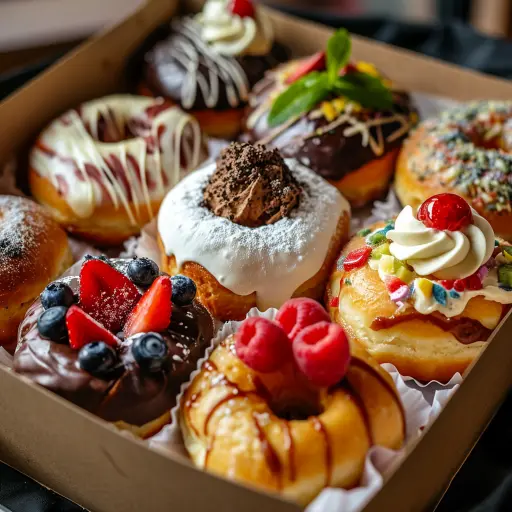
When we opened Hill Donut Co., one of the first decisions we made was also one of the most important: what kind of dough to use. Most donut shops go with a standard yeast dough or a cake batter. Both are fine. Both are efficient. Both are predictable.
We went with brioche, and people ask us why all the time. Here's the honest answer.
The CIA Connection
Our chef trained at the Culinary Institute of America — one of the most respected culinary schools in the world. At the CIA, you learn that ingredients matter, technique matters, and shortcuts always show up in the final product.
French pastry technique was a core part of that training, and brioche is one of the foundational doughs in French baking. It's the dough used in some of the finest bakeries in Paris. When it came time to choose a donut dough, applying that training to create something genuinely exceptional felt like the obvious choice.
What Makes Brioche Dough Different
Brioche is an enriched dough, which means it contains a significantly higher percentage of butter and eggs than standard dough. Here's what that means in practice:
More butter. A lot more. The butter gets incorporated into the dough gradually during mixing, creating a texture that's incredibly tender and rich. This is the single biggest differentiator — you can taste and feel the butter in every bite.
More eggs. Whole eggs and extra yolks give brioche its signature golden color and contribute to the soft, almost custard-like crumb. When you see a Hill Donut with that deep golden hue, that's the eggs at work.
A hint of sourdough. Our dough isn't just brioche — we add a touch of sourdough to the mix, which gives each donut a subtle depth of flavor you won't find anywhere else. That slight tang plays off the butter beautifully.
Layered like a croissant. We don't just mix the dough and fry it. We layer it — similar to how a croissant is laminated. Those flaky, buttery layers are what give our donuts their incredible texture.
A full 2-day process. Each batch of donuts takes 2 days from start to finish. The dough needs time for the sourdough to develop, time for the butter to fully incorporate through the layering process, and time to proof properly. We can't rush it — and we won't.
More skill. Brioche is notoriously tricky to work with. Add sourdough and croissant-style layering and you've got a dough that demands real pastry skill. Too warm and it becomes unmanageable. Too cold and it won't proof properly. There's a reason most shops don't even attempt it.
Why Most Shops Don't Bother
Let's be direct about this. Brioche dough is:
- More expensive (all that butter and eggs adds up)
- More time-consuming (longer mixing, longer proofing)
- More difficult to handle (requires skilled bakers)
- Less forgiving (mistakes show up immediately)
For a shop optimizing for speed and cost, standard dough makes more business sense. You can produce more donuts, faster, at a lower ingredient cost.
We made a different calculation. We'd rather make fewer donuts that are genuinely exceptional than pump out hundreds of average ones. Quality over quantity, every time.
The Taste Test
You don't need a culinary degree to taste the difference. Here's what people notice when they try our brioche donuts for the first time:
"It's so buttery." That's the brioche talking. The butter creates a richness that standard donut dough just doesn't have.
"The texture is incredible." Brioche has a pull-apart quality — soft and pillowy but with substance. It's not hollow or doughy. It's that perfect middle ground.
"It doesn't taste like a regular donut." That's the point. A brioche donut is a fundamentally different experience. The dough itself has flavor, not just the glaze on top.
"It's huge." We make our donuts big because the richness of brioche can be intense in a small package. A larger format lets you enjoy the full experience without it being overwhelming.
Our Daily Process
Every morning, our team goes through the full brioche process:
1. Mix the dough with careful attention to butter incorporation 2. First proof — let the dough rise slowly 3. Shape each donut by hand 4. Second proof — another rise for optimal texture 5. Fry at the precise temperature for a golden exterior and cooked-through interior 6. Glaze, top, and finish each donut while they're still warm
It takes hours. It takes skill. It takes quality ingredients. But the result is a donut that's worth every minute of the process.
The Bottom Line
We use brioche dough because it makes a better donut. Not a different donut, not a fancier donut — a better one. The butter, the eggs, the technique, the time — it all comes through in the final product.
If you've tried our donuts, you know. If you haven't, come in and taste the difference for yourself. We're at 1845 Marsh Road in Wilmington, and we make them fresh every single morning.